


What if the heartburn, bloating, belching, or uncomfortable fullness you feel after a meal isn’t a sign of too much stomach acid—but too little?
It may sound backward, especially after years of hearing that stomach acid is something we need to control. But your body makes hydrochloric acid for a reason. You need it to break down protein, absorb key nutrients, and help protect your digestive tract from unwanted microbes.
When stomach acid runs low—a condition known as hypochlorhydria—digestion can begin to suffer, and the signs aren’t always what you’d expect.
What Is Low Stomach Acid?
Your stomach produces hydrochloric acid, or HCl, every time you eat. Think of it as part of your digestive system’s opening act. Before your body can make good use of the protein, vitamins, and minerals in your meal, that food has to be properly broken down.
Hydrochloric acid helps create the highly acidic environment your stomach needs to do that job.
It helps break down protein, activates the digestive enzyme pepsin, supports the absorption of important nutrients, and serves as one of the body’s first lines of defense against potentially harmful microbes that arrive with food.
When your stomach doesn’t produce enough hydrochloric acid, it’s called hypochlorhydria, or more simply, low stomach acid.
And here’s where things get interesting: low stomach acid doesn’t always announce itself in an obvious way.
What Are the Signs of Low Stomach Acid?
You might expect too little stomach acid to make your stomach feel better. After all, less acid should mean less irritation, right?
Not necessarily.
Without enough acid to help break down a meal efficiently, food may linger, and digestion can become sluggish. That can lead to symptoms that are easy to blame on something else.
Some of the most common signs associated with low stomach acid include:
- Bloating or feeling uncomfortably full after eating
- Frequent belching or gas
- Indigestion
- Heartburn or reflux
- Abdominal discomfort
- Constipation or diarrhea
- Undigested food in the stool
Over time, low stomach acid can also interfere with the body’s ability to obtain certain nutrients from food. Deficiencies in vitamin B12, iron, calcium, and magnesium may occur, potentially contributing to fatigue, weakness, brittle nails, hair loss, or numbness and tingling. ok
Of course, having one—or even several—of these symptoms doesn’t automatically mean your stomach acid is low. Many digestive conditions can cause similar complaints. But if you regularly finish a meal feeling as though your food is just sitting there, low stomach acid may be one possibility worth investigating.
Why Does Stomach Acid Matter So Much?
We tend to think of digestion as something that happens in the intestines, but much of the groundwork begins in the stomach.
Protein is a good example.
When protein reaches your stomach, hydrochloric acid helps unfold its tightly packed structure and converts pepsinogen into pepsin, the enzyme that begins breaking protein into smaller pieces your body can eventually absorb and use.
Stomach acid also helps make certain nutrients more available for absorption, including vitamin B12, iron, calcium, and magnesium.
And there’s another job that doesn’t get nearly as much attention: stomach acid helps protect you.
That intensely acidic environment creates a formidable barrier for many bacteria and other microorganisms that enter the body with food. When stomach acidity is reduced, some microbes have a better chance of surviving their trip through the stomach.
So stomach acid isn’t a digestive nuisance your body accidentally produces. It’s there for a reason.
What Causes Low Stomach Acid?
Low stomach acid can happen for several reasons, and some become more relevant as we get older.
- Age. Stomach acid production can decline with age as the cells that produce gastric acid change.
- H. pylori infection. Helicobacter pylori can cause chronic inflammation of the stomach lining and, in some people, interfere with normal acid production.
- Chronic or atrophic gastritis. Long-standing inflammation can damage the stomach cells that produce digestive secretions.
- Certain medications. Proton pump inhibitors (PPIs), H2 blockers, and other acid-reducing medications are specifically designed to reduce stomach acid. They can be important treatments for conditions such as GERD and ulcers, but long-term acid suppression can also result in very low stomach acidity.
- Stomach surgery. Procedures that alter the stomach, including gastric bypass surgery, can affect normal acid production.
That brings us to one of the most confusing questions about this topic.
Can Low Stomach Acid Cause Heartburn?
It sounds like a contradiction.
If acid is what burns, how could having too little stomach acid possibly be associated with heartburn?
The important distinction is that heartburn is about acid being in the wrong place—not necessarily how much acid your stomach produces overall.
Your stomach is designed to handle an acidic environment. Your esophagus isn't.
When stomach contents travel upward into the esophagus, even a relatively small amount of acid can cause that familiar burning sensation. Poor digestion associated with low stomach acid may also contribute to gas and pressure in the stomach, which can push stomach contents upward.
This doesn't mean that everyone with heartburn has low stomach acid. GERD is a complex condition with many possible contributing factors, and a healthcare professional should evaluate persistent reflux.
But it does explain why simply assuming that every case of heartburn means "too much acid" may not tell the whole story.
How Can You Support Healthy Stomach Acid?
If you suspect low stomach acid, start with the basics.
Slow down when you eat. Chew your food thoroughly. Smaller meals may be easier to digest than very large ones, particularly if you're already struggling with bloating or uncomfortable fullness.
It can also be important to identify why stomach acid is low in the first place. An H. pylori infection, gastritis, nutrient deficiencies, medication use, and other underlying issues may need to be addressed rather than simply trying to increase stomach acid on your own.
For people with confirmed or suspected hypochlorhydria, supplemental betaine hydrochloride (betaine HCl) is sometimes taken with meals to increase stomach acidity temporarily.
Some intriguing human research supports it.
In one small clinical study, researchers deliberately suppressed stomach acid in six healthy adults using a proton pump inhibitor. When participants were then given 1,500 mg of betaine HCl, their average stomach pH dropped from 5.2 to 0.6 within 30 minutes. On average, it took just over six minutes for stomach pH to fall below 3.
The effect was temporary, lasting a little over an hour, but the study demonstrated something important: supplemental betaine HCl can rapidly change gastric acidity under experimentally induced low-acid conditions.
A Little Digestive Support Can Go a Long Way
If low stomach acid is part of the problem, supporting the digestive process at mealtime may help your body do what it was designed to do.
That’s the thinking behind UNI KEY’s HCL+2. Instead of providing betaine hydrochloride alone, HCL+2 combines three important digestive helpers: Betaine HCl, pepsin, and ox bile extract.
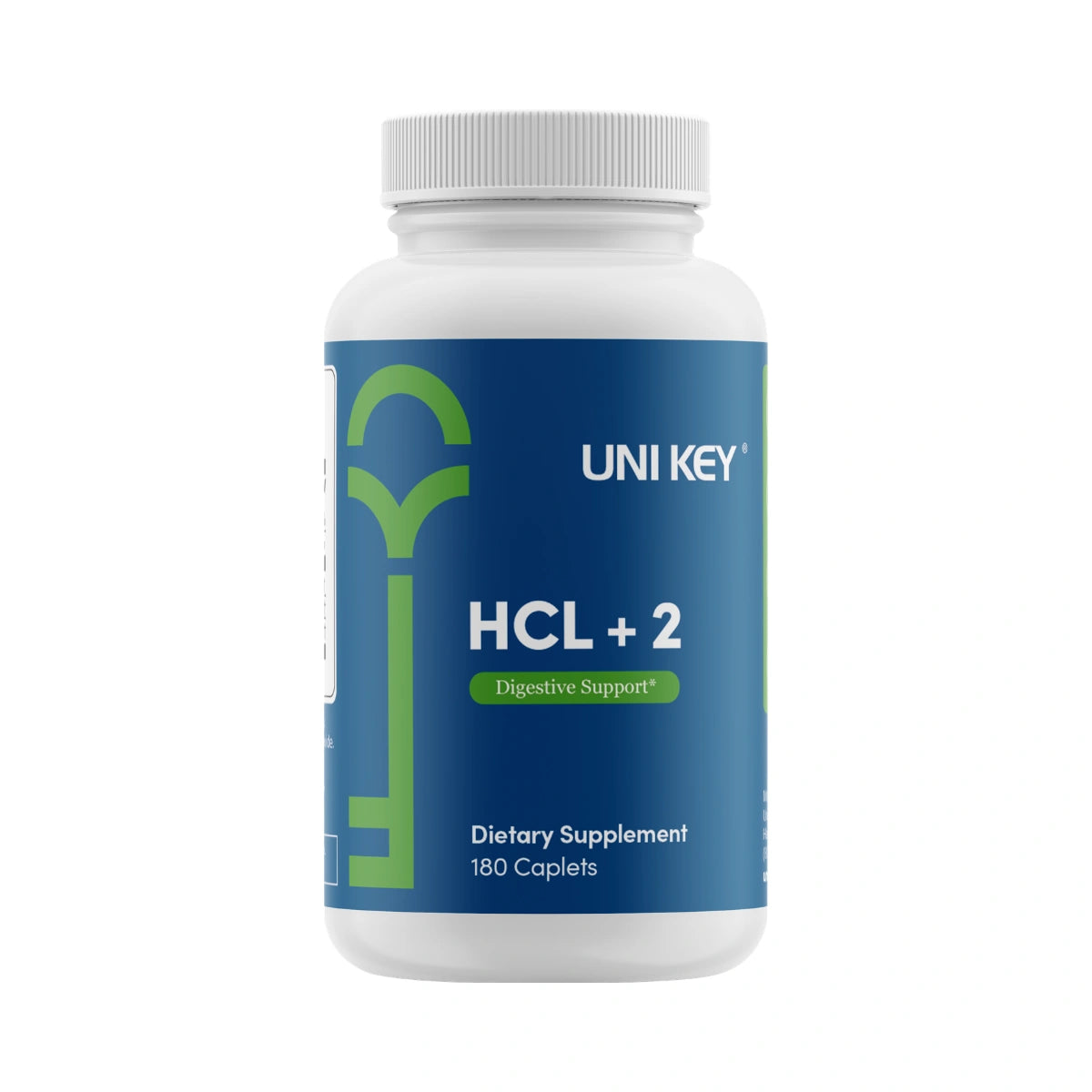
HCL+2
- ✓ Supports healthy stomach acidity
- ✓ Helps support protein digestion
- ✓ Supports healthy fat digestion
- Betaine HCl helps support the acidic environment your stomach needs to break down food and activate digestive enzymes properly.
- Pepsin works alongside stomach acid to begin breaking proteins into smaller peptides your body can use.
- Ox bile extract helps emulsify dietary fats, making them easier to digest and absorb.
Together, these three ingredients support digestion right where it begins, helping your body better handle protein and fat while supporting the absorption of important nutrients.
HCL+2 is especially worth considering if meals—particularly those higher in protein or fat—leave you feeling heavy, bloated, or as though your food is just sitting there.
Take HCL+2 during or immediately after a meal, according to label directions. It is not recommended for everyone, including those with a hiatal hernia, ulcers or pre-ulcerous conditions, esophageal irritation or erosion, or a thinned stomach lining. It should also not be used with anti-inflammatory medications. If you have an existing digestive condition or take medications, check with your healthcare provider before supplementing with HCl.
The Bottom Line
We’ve been conditioned to think of stomach acid as something that causes trouble. But the truth is, you need stomach acid to digest your food and get the nutrients from it.
When levels fall too low, the clues can be surprisingly ordinary: bloating, belching, indigestion, uncomfortable fullness, and even symptoms that feel like acid reflux.
The answer isn’t to assume that every digestive complaint is caused by low stomach acid—or to start taking HCl based on symptoms alone. It’s to pay attention to what your body is telling you and look for the reason digestion isn’t working as well as it should.
Sometimes better digestion begins with something remarkably simple: giving your stomach the support it needs to do its job.
Frequently Asked Questions
What does low stomach acid feel like?
Low stomach acid can be associated with bloating, belching, gas, indigestion, abdominal discomfort, feeling overly full after eating, and reflux or heartburn symptoms. Because these symptoms overlap with many other digestive conditions, symptoms alone can't confirm that you have low stomach acid.
Can low stomach acid cause bloating?
It can. When you don’t have enough stomach acid, food—especially protein—may take longer to break down. That can leave you feeling bloated, gassy, or uncomfortably full after a meal.
Can you have acid reflux with low stomach acid?
Yes, reflux symptoms can occur in people with low stomach acid, but that doesn't mean low stomach acid causes every case of reflux. Heartburn occurs when stomach contents move into the esophagus, and GERD can have several underlying causes.
Does stomach acid decrease with age?
Stomach acid production can decline in some people as they get older, particularly when age-related changes to the stomach lining, chronic gastritis, H. pylori infection, or long-term use of acid-suppressing medications are involved.
What nutrients can be affected by low stomach acid?
Stomach acid does more than help digest your food. It also helps your body get important nutrients such as vitamin B12, iron, calcium, and magnesium. When stomach acid stays low for too long, it may become harder to get enough of these nutrients from your diet.
Who should not take an HCl supplement?
Betaine HCl isn't appropriate for everyone. People with peptic ulcers or certain inflammatory conditions affecting the stomach or digestive tract should not self-treat with supplemental acid. If you take prescription medications—particularly medications that affect stomach acid—or have an existing gastrointestinal condition, talk with your healthcare provider before using an HCl supplement.
This article is for general education and is not medical advice. Talk with your healthcare provider before adding a supplement if you are pregnant, nursing, or managing a health condition.
Resources include:
Yago MR, Frymoyer AR, Smelick GS, Frassetto LA, Budha NR, Dresser MJ, Ware JA, Benet LZ. Gastric reacidification with betaine HCl in healthy volunteers with rabeprazole-induced hypochlorhydria. Mol Pharm. 2013 Nov 4;10(11):4032-7. doi: 10.1021/mp4003738. Epub 2013 Sep 10. PMID: 23980906; PMCID: PMC3946491.


