

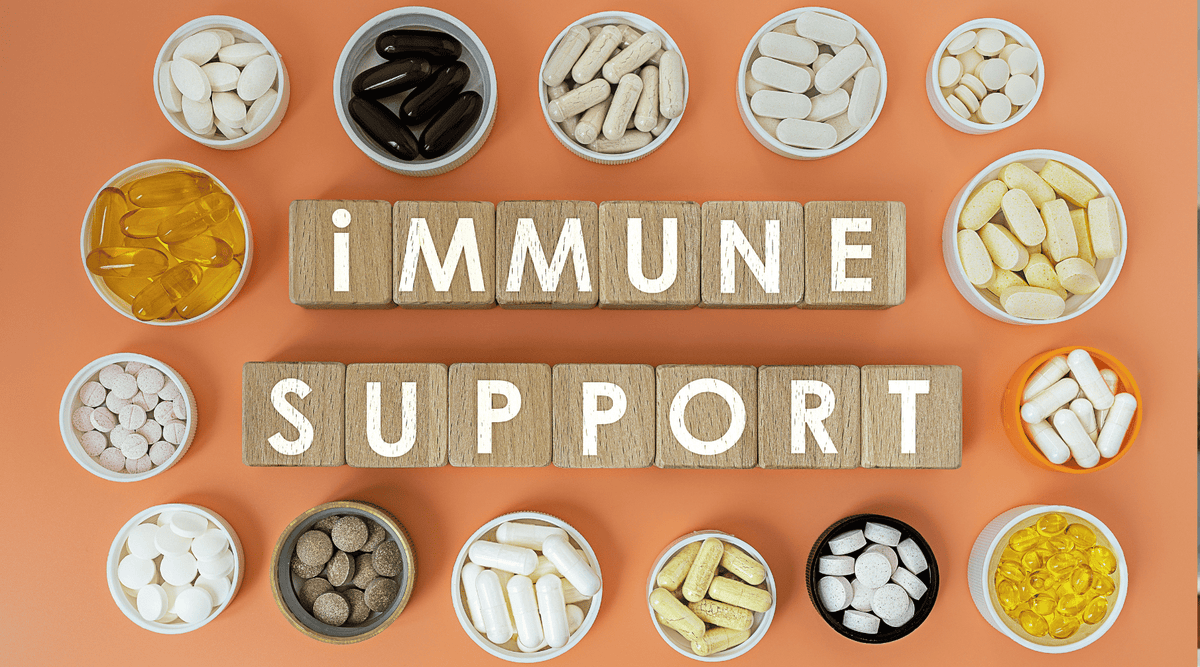
Why Vitamin C Alone Isn’t Enough
Someone at the office starts coughing. Or the grandkids come to visit and one of them is sneezing. Either way, you make a beeline for vitamin C.
We’ve all done it. Vitamin C is important—no argument there—but is it the only thing worth grabbing? And what can you realistically expect from it?
We hear this question every Fall. What vitamins or supplements really help? Do I need Vitamin D, zinc, or any of those multi-ingredient formulas that line the shelves?
You may be surprised at the answer because it depends on what you’re already eating, how well you’re sleeping, and how much stress you’re carrying.
Let’s look at the nutrients that actually matter, the research without the hype, and what you’ll find on the labels when you shop.
If you’re already sniffling and trying to figure out whether it’s a cold or allergies, our guide Cold vs. Allergies: What Your Body Is Really Telling You can help sort it out.
What Your Immune System Actually Needs Day to Day
Your body uses vitamin A to keep the linings of your airways and gut in good shape. Vitamin C and zinc help immune cells do their job. Vitamin D helps keep immune activity in check. B vitamins, selenium, and magnesium play supporting roles too. It’s a longer list than the front of most “immune support” bottles suggests.
Before you buy anything, take a quick look at what you eat most days. If you’re already getting enough of a nutrient from food, piling on more usually doesn’t move the needle. We talk about the everyday habits that matter year-round in our article on year-round immune support.
What Can Vitamin C Really Do?
Vitamin C helps your body make collagen and supports normal immune function. Oranges get all the credit, but bell peppers, kiwi, strawberries, and broccoli are packed with it too. Most adult women need about 75 mg a day; most men need 90 mg. Smokers need an extra 35 mg.
Will it stop you from catching a cold? Not really—not for most people. Taking it regularly has been shown to shorten a cold a little. Starting it after you’re already sick is less convincing. The clearest benefit showed up in people under short, intense physical stress, like marathon runners.
If regular vitamin C capsules upset your stomach, Vitality C is the easier swap. It’s a mixable powder made with a buffered, non-acidic form of vitamin C, so it goes down without the burn. One scoop in water or juice delivers 4,000 mg. High-potency support without adding another capsule to your day.

Vitality C
- ✓ Buffered, non-acidic vitamin C
- ✓ Easy on the stomach
- ✓ 4,000 mg of vitamin C per scoop
Why Vitamin D Matters More in Winter
Summer and winter feel like two different worlds. In July you’re outside more, and your skin can make vitamin D from the sun. By January, most of us are spending a lot more time indoors. That means your body produces less of it on its own.
Fatty fish and fortified foods can help fill the gap, but the amount you actually get depends on what’s on your plate most days. Adults through age 70 need about 600 IU a day. From 71 on, it’s 800 IU. The upper limit for most adults is 4,000 IU a day unless a clinician is guiding a higher dose and checking your levels.
If you don’t get much sun or rarely eat vitamin D-rich foods, a supplement can be a practical way to stay in range. The best way to know for sure is to have your levels checked.
Can Zinc Shorten a Cold?
Zinc doesn’t get the same attention as vitamin C, but your immune system depends on it. Every. Single. Day.
You can get zinc from meat, poultry, oysters, beans, nuts, and whole grains. Adult women generally need 8 mg a day; adult men need 11 mg.
You’ve probably heard zinc can shorten a cold. A 2024 Cochrane review found that people who took zinc after symptoms started had colds that were about two days shorter, on average. That number comes with caveats. The studies used different doses and forms, and many looked at oral lozenges started early.
A few things to keep in mind with zinc. Oral zinc can taste metallic or bother your stomach. Anything meant for the nose should be skipped — there have been reports of lost sense of smell. And more isn’t better. For daily use, stay under 40 mg for adults. Too much over time can interfere with copper, and zinc can interact with some antibiotics and penicillamine. If you take medication, ask your pharmacist.
What About the Other Nutrients on the Label?
Vitamin A, B vitamins, selenium, and magnesium don’t get the same spotlight as C and zinc, but your body still needs them. Eggs, dairy, and orange or dark-green vegetables give you vitamin A. Fish, poultry, and legumes bring B vitamins. Beans, seeds, greens, and whole grains supply magnesium; seafood and meats provide selenium.
If those foods aren’t showing up on your plate most days, a daily multi can help cover the gaps. UNI KEY’s Advanced Daily Multivitamin includes vitamin A, methylated B vitamins, magnesium, selenium, and other nutrients your immune system uses in the background.

Advanced Daily Multivitamin
- ✓ Vitamin A and methylated B vitamins
- ✓ Includes magnesium and selenium
- ✓ Helps cover everyday nutritional gaps
What Does Stress Have to Do With This?
When life gets hectic, the first things to slip are usually the ones that keep you well. Dinner gets pushed later. Sleep gets shorter. And suddenly the idea of a balanced meal feels like one more thing on the to-do list. That ongoing pressure doesn’t just leave you tired. It can quietly throw off appetite, sleep quality, and how your immune system keeps its balance.
Cortisol is a normal part of how your body handles stress. You don’t need to turn it off. What helps most is simply giving yourself a more steady rhythm so you don’t stay in that worn-down state for too long.
That’s where Adrenal Formula comes in. It’s not just a few extra vitamins. We combine vitamin C, B6, pantothenic acid, zinc, and L-tyrosine with whole adrenal and adrenal cortex glandulars.
The goal is simple: support your stress response and help keep your energy more even—without stimulants.

Adrenal Formula
- ✓ Vitamin C, B6, and pantothenic acid
- ✓ Includes zinc and L-tyrosine
- ✓ Supports a balanced stress response
Food First or Supplements First?
Start with what ends up on your plate most days. Maybe lunch needs more protein—chicken, fish, eggs, or beans. A bigger serving of greens or non-starchy vegetables can help too. Those foods bring the nutrients that support immune function without loading up on sugar.
That’s the same idea behind Ann Louise Gittleman’s approach. Real food, steady blood sugar, and a lower-carb style of eating that helps the body stay balanced. Learn more at FatFlush.com.
Cold and flu season also calls for the usual basics. We cover those in Flu Season: 5 Key Facts for Prevention.
Quality is Everything
We never cut corners at UNI KEY. Not on ingredients and not on testing.
Every raw ingredient is screened to confirm it’s exactly what it should be. Our formulas are made in facilities that follow Good Manufacturing Practices. And once they’re finished, they’re tested twice: once by our manufacturing partner and again by an independent third-party lab. We check for potency, label accuracy, and purity, including heavy metals and microbial contaminants. No shortcuts. No compromises.
You can see exactly how we do it on our Quality Commitment page.
What a Simple Seasonal Routine Looks Like
When cold and flu season rolls around, it helps to keep things simple. Here’s the approach many of us use:
- Vitality C when you want a solid dose of vitamin C that’s easy on the stomach
- Immune Formula for everyday support with a wider mix of vitamins, zinc, and herbs
- Adrenal Formula for those weeks when stress and busy schedules leave you running on empty
Vitality C gives you focused vitamin C support. Immune Formula covers more bases for daily use. And Adrenal Formula steps in when the pace of the season starts to wear on you. Together, they make a practical, no-fuss routine for the months ahead.
Frequently Asked Questions
What are the best vitamins for the immune system?
Vitamins C, D, A, B6, and B12 all contribute to normal immune function. Zinc and selenium matter too. Whether it’s worth supplementing depends on what you’re already getting from food and whether you’re falling short.
Does vitamin C actually prevent colds?
Regular vitamin C doesn’t appear to prevent colds for most people. It may make them a little shorter, but starting it only after symptoms begin hasn’t shown consistent benefit.
Should I take vitamin D in winter?
Less sun can affect your vitamin D status, but your needs depend on more than the season. Look at what you already get from food and supplements, and ask your practitioner whether testing or a supplement makes sense.
Does zinc shorten a cold?
It might. A Cochrane review found oral zinc taken after symptoms started may shorten a cold by about two days on average, but the evidence was uncertain and side effects happened. A daily zinc capsule isn’t the same as the lozenges studied for early use.
Can you take immune supplements every day?
Some are designed for daily use. Check the label, follow the directions, and add up overlapping ingredients—especially zinc and vitamins A and D. Check with your practitioner if you take medication, are pregnant, or have a health condition.
What’s the best time of day to take immune vitamins?
Pick a time that helps you stay consistent. Vitamin D can be taken with a meal that has some fat. Zinc is often gentler on the stomach with food, but ask your pharmacist about spacing it from medications.
Sources and Further Reading
- NIH Office of Dietary Supplements. Dietary Supplements for Immune Function and Infectious Diseases, Consumer Fact Sheet. https://ods.od.nih.gov/factsheets/ImmuneFunction-Consumer/
- NIH Office of Dietary Supplements. Vitamin C, Consumer Fact Sheet. https://ods.od.nih.gov/factsheets/VitaminC-Consumer/
- Cochrane. Vitamin C for Preventing and Treating the Common Cold. https://www.cochrane.org/evidence/CD000980_vitamin-c-preventing-and-treating-common-cold
- NIH Office of Dietary Supplements. Vitamin D, Consumer Fact Sheet. https://ods.od.nih.gov/factsheets/VitaminD-Consumer/
- NIH Office of Dietary Supplements. Zinc, Consumer Fact Sheet. https://ods.od.nih.gov/factsheets/Zinc-Consumer/
- Cochrane. Zinc for the Prevention and Treatment of the Common Cold. https://www.cochrane.org/evidence/CD014914_zinc-prevention-and-treatment-common-cold
- NCCIH. Colds, Flu, and Complementary Health Approaches: Usefulness and Safety. https://www.nccih.nih.gov/health/colds-flu-and-complementary-health-approaches
- NCCIH. Let’s Talk About Stress and Stress Research. https://www.nccih.nih.gov/about/offices/od/director/past-messages/lets-talk-about-stress-and-stress-research
- NIH Office of Dietary Supplements. Dietary Supplements: What You Need to Know. https://ods.od.nih.gov/factsheets/WYNTK-Consumer/
- NIH Office of Dietary Supplements. Frequently Asked Questions on Supplement Quality. https://ods.od.nih.gov/HealthInformation/ODS_Frequently_Asked_Questions/
- UNI KEY Health. Our Quality Commitment. https://unikeyhealth.com/pages/quality
These statements have not been evaluated by the Food and Drug Administration. These products are not intended to diagnose, treat, cure, or prevent any disease.


