


With so many different weight-management supplements out there, it isn't always easy to determine what you really need and why.
For many people, navigating the world of nutritional supplements can feel overwhelming. Our team fields questions every day, and one of the most common is about two fatty acids with remarkably similar names: GLA and CLA.
What's the difference between GLA and CLA supplements? Are they interchangeable? Do they support the same goals? And should you consider one or both?
With only one letter separating their abbreviations, the confusion is understandable. But GLA and CLA are actually two distinct omega-6 fatty acids with different structures, sources, and functions in the body.
Let's break down what makes each one unique, how they may support your health and body-composition goals, and which UNI KEY formula may be the better fit for your needs.
First, What Are GLA and CLA?
Both GLA and CLA belong to the omega-6 family of fatty acids, but they are not the same compound.
GLA stands for gamma-linolenic acid. It's an omega-6 fatty acid found in certain plant oils, including black currant seed oil. Your body uses GLA to produce other fatty acids involved in normal inflammatory and cellular signaling processes.
CLA stands for conjugated linoleic acid. It's a group of naturally occurring fatty acid isomers found in foods such as meat and dairy from ruminant animals. Supplemental CLA is commonly derived from safflower oil and is studied primarily for its potential effects on body composition and fat metabolism.
Although both have been researched for metabolic health, they have different nutritional roles. Understanding those differences is the key to choosing the right supplement.
GLA: Gamma-Linolenic Acid
Essential Fatty Acid Support for Metabolism, Skin, and Hormonal Health
GLA is an omega-6 fatty acid that plays an important role in the body's fatty acid metabolism. It is a precursor to dihomo-gamma-linolenic acid (DGLA), which is involved in producing signaling molecules called prostaglandins.
These compounds help regulate a variety of normal processes, including inflammatory responses and cellular communication. That's one reason GLA has attracted interest for its potential role in skin health, hormonal comfort, and metabolic function.
How GLA May Support Your Weight-Management Goals
One area of research surrounding GLA involves its possible influence on how the body uses and stores energy.
GLA has been studied for its potential role in weight maintenance, particularly in people who have previously lost a significant amount of weight. One clinical study found that GLA supplementation was associated with less weight regain following major weight loss.
However, this doesn't mean GLA is a guaranteed fat burner or appetite suppressant. The research is limited, and more studies are needed to establish how meaningful these effects may be for different individuals.
GLA and Healthy-Looking Skin
GLA is also especially interesting when it comes to skin health. Essential fatty acids help support the skin's natural barrier, which plays an important role in maintaining moisture and protecting against environmental irritation.
Getting enough essential fatty acids can be particularly relevant for people experiencing dry or uncomfortable skin. GLA is also involved in the body's normal inflammatory signaling pathways, making it an important nutrient to understand when supporting skin health from within.
Meet GLA-90 from UNI KEY
Our GLA-90 formula provides gamma-linolenic acid from cold-pressed black currant seed oil. Each serving of two softgels contains 90 mg of GLA.
It's a targeted source of this important fatty acid for those looking to support their essential fat intake, skin health, and healthy metabolic function.

GLA-90
Support your body's essential fatty acid needs with gamma-linolenic acid from cold-pressed black currant seed oil.
- Provides 90 mg of GLA per serving
- Supports healthy skin-barrier function
- Supports normal inflammatory and metabolic processes
CLA: Conjugated Linoleic Acid
Research-Backed Interest in Body Composition and Fat Metabolism
Now let's talk about CLA. Unlike GLA, which is often discussed in connection with essential fatty acid metabolism and skin health, CLA has been studied primarily for its potential effects on body composition.
CLA is a naturally occurring group of fatty acid isomers found in small amounts in certain animal foods. Supplemental CLA is often sourced from safflower oil and concentrated into softgels.
How CLA May Support Body Composition
CLA has been studied for its potential influence on how the body stores and uses fat. Researchers have explored whether it can help support a healthier balance of body fat and lean body mass.
Some clinical studies and research reviews have found small changes in body weight, body fat percentage, or lean body mass among people taking CLA. However, the results are mixed. A 2024 systematic review and meta-analysis found that the overall changes were small and that higher-quality studies did not consistently demonstrate a reduction in body fat.
In other words, CLA may offer some support for body-composition goals, but it isn't a shortcut to weight loss, and it should not be expected to selectively burn belly fat or replace healthy nutrition and physical activity.
CLA and Lean Muscle Support
Another area of interest is the relationship between CLA and lean body mass. Some studies have investigated whether CLA supplementation may help preserve or modestly influence lean mass while supporting changes in body composition.
Maintaining muscle is an important part of healthy aging and long-term weight management. Resistance exercise, adequate protein intake, and consistent movement remain the foundations of maintaining lean muscle. CLA is best viewed as a possible nutritional addition, not a substitute for those habits.
Meet CLA-1000 from UNI KEY
CLA-1000 provides 1,000 mg of conjugated linoleic acid per softgel, derived from safflower oil. Each softgel contains a minimum of 80% CLA.
It's formulated for individuals interested in supporting healthy fat metabolism and body-composition goals as part of a balanced lifestyle.
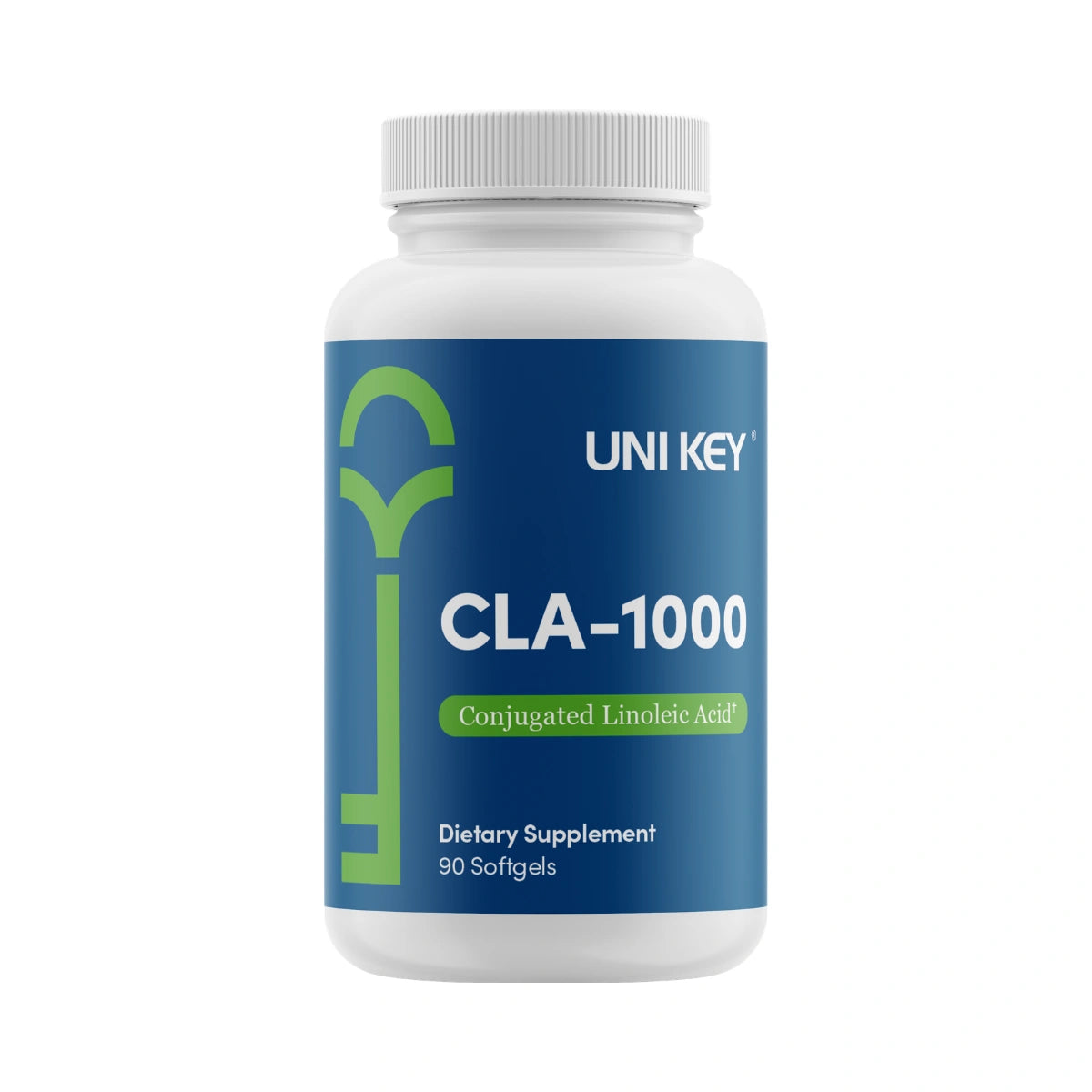
CLA-1000
Support your body's fat metabolism and body-composition goals with concentrated conjugated linoleic acid from safflower oil.
- 1,000 mg CLA per softgel
- Minimum 80% CLA concentration
- Supports healthy fat metabolism and lean body composition
GLA vs. CLA: What's the Difference?
Here's a quick side-by-side comparison to help you understand how these two fatty acids differ.
| Feature | GLA | CLA |
|---|---|---|
| Full name | Gamma-linolenic acid | Conjugated linoleic acid |
| Fatty acid family | Omega-6 | Omega-6 |
| UNI KEY source | Cold-pressed black currant seed oil | Safflower oil |
| Primary research interest | Essential fatty acid metabolism, skin health, and inflammatory signaling | Body composition and fat metabolism |
| UNI KEY formula | GLA-90 | CLA-1000 |
The Simple Takeaway
GLA is the fatty acid to explore for essential fat intake, skin-barrier support, and healthy inflammatory signaling.
CLA is the fatty acid to explore for research related to body composition and fat metabolism.
They are different nutrients with different purposes, even though they both belong to the omega-6 family.
Can You Take GLA and CLA Together?
Because GLA and CLA are different fatty acids, some people choose to include both in their supplement routines. They provide different kinds of nutritional support, so one isn't necessarily a replacement for the other.
For example, someone interested in supporting skin health and essential fatty acid intake may be drawn to GLA-90, while someone focused on body composition may be more interested in CLA-1000.
Whether taking both is appropriate depends on your individual health needs, diet, medications, and other supplements. More supplements do not automatically mean better results. It's always a good idea to discuss a combined supplement routine with your healthcare professional, especially if you have a medical condition or take prescription medication.
What Do Customers Say?
We love hearing how UNI KEY supplements fit into our customers' daily routines. Here are a few experiences shared by GLA-90 and CLA-1000 customers.
"Fantastic! I do feel it helps with slimming. That's an absolute miracle, considering hormones and other significant challenges. I never thought this was possible. I'm a huge fan!"
– Nan T., GLA-90 customer"I've been using GLA 90 for years and I absolutely love it! I consistently receive compliments on my skin."
– Danielle C., GLA-90 customer"After a week I noticed that I wasn't eating or thinking about food when bored. I needed help staying away from fast food and sweets in-between meals, and after adding the CLA supplement to my daily routine, I didn't want to eat between meals."
– Kay M., CLA-1000 customerCustomer experiences are individual and are not a guarantee of results. Testimonials do not establish that a supplement treats a medical condition or produces the same outcome for everyone.
So, Should You Choose GLA or CLA?
Now that you know the difference, choosing between GLA and CLA comes down to your personal nutritional goals.
If you're looking for a source of gamma-linolenic acid to support essential fatty acid intake, skin health, and normal inflammatory processes, explore GLA-90.
If you're interested in conjugated linoleic acid and its research around body composition and fat metabolism, take a closer look at CLA-1000.
And remember: supplements work best as part of a bigger picture. A nutrient-rich diet, adequate protein, regular strength training, quality sleep, and consistency all matter when it comes to supporting a healthy metabolism and maintaining your progress.
At UNI KEY, we believe in giving your body the nutritional tools it needs to work at its best. The right choice starts with understanding what you're taking and why.
Find Your Fatty Acid Match
Explore the difference for yourself and discover which formula best fits your health and body-composition goals.
Frequently Asked Questions About GLA and CLA
Is GLA the same as CLA?
No. GLA stands for gamma-linolenic acid, while CLA stands for conjugated linoleic acid. Both are omega-6 fatty acids, but they have different chemical structures and different roles in the body.
Which is better for weight management, GLA or CLA?
They have been researched for different metabolic effects. GLA has been studied for its possible role in weight maintenance following weight loss, while CLA has been studied for body composition and fat metabolism. Evidence for meaningful weight loss from either supplement is limited, and neither should be considered a stand-alone weight-loss solution.
Does GLA help with skin health?
GLA is involved in fatty acid metabolism and the production of signaling molecules that help regulate normal inflammatory processes. Essential fatty acids also contribute to healthy skin-barrier function. GLA is one nutrient that may help support skin health from within.
Does CLA specifically target belly fat?
No supplement can guarantee targeted fat loss from one area of the body. CLA has been studied for its potential effects on overall body composition, but research results are mixed and any observed changes tend to be modest.
Can GLA and CLA be taken together?
They are different fatty acids and are generally safe to be included in the same supplement routine, depending on individual needs. Ask your healthcare professional before combining supplements, especially if you take medication or have an underlying health condition.
What is the source of GLA-90?
GLA-90 contains gamma-linolenic acid from cold-pressed black currant seed oil. Each serving of two softgels provides 90 mg of GLA.
What is the source of CLA-1000?
CLA-1000 is derived from safflower oil. Each 1,000 mg softgel contains a minimum of 80% conjugated linoleic acid.
How do I take GLA-90 and CLA-1000?
According to the current product directions, adults take two GLA-90 softgels twice daily with meals. For CLA-1000, adults take one softgel three times daily, preferably with meals. Follow the product label or your healthcare professional's instructions.
Are there precautions when taking CLA?
People with blood sugar regulation concerns, metabolic conditions, or liver conditions should discuss CLA supplementation with a healthcare professional before use. Research on CLA has reported mixed metabolic findings, so individual circumstances matter. Consult your healthcare professional if you are pregnant, nursing, taking medication, or managing a health condition.
These statements have not been evaluated by the Food and Drug Administration. These products are not intended to diagnose, treat, cure, or prevent any disease. Individual results may vary.
Related Reading
- The Top 5 Reasons Your Weight Won't Budge
- The Little Spoonful That Supports Your Heart, Hormones, and Skin
- How Diane Finally Lost Those Last 10 Pounds (and Kept Them Off!)
- Is There a Natural Remedy That Works for Autoimmune Joint Pain?
- How to Fix Uneven Skin Tone: Natural Solutions for Splotchy, Imperfect Skin


19 comments
If taking Unikey GLA and/or CLA, Omega 6’s, how much and what source of Omega 3’s should be taken to balance the ratio. Perhaps GLA and CLA are only considered good forms of Omega 6’s and only anti-inflammatory so consuming does not upset balance of good to bad. Thanks.
Dela, Advising people on supplements related to medications is beyond the scope of our expertise. If you wish to schedule a consultation with Ann Louise Gittleman here is the link: https://annlouise.com/consultations/
Hello,
If someone is taking 25mg 1 tablet of losartan & same of hydrochlorothiazide, which of your supplements can they use to help them to get off the above. What can the person use alongside the above to address a few pounds without negative reaction? Dr’s advice is to take the above daily without missing a day. She also does not advise to take any supplements except multivitamin. This person is perfect on diet & healthy lifestyle except intensive exercise due to ankle & shoulder injuries, how can you (please Dr. Gittleman), help this person to stop the 2 meds.Thank you.
Hi Mary – You do not want to take large doses of CLA when you have a fatty liver but CLA supplementation has actually been shown to improve liver function in people with non-alcoholic fatty liver disease. You want to stay with an amount of 3000 mg or less per day.
Is it all right to take CLA with a fatty liver