

Still dealing with bloating, fatigue, or digestive issues that no one can explain?
Maybe you’ve tried the usual fixes. You’ve cut foods, added probiotics, maybe even done a basic lab test—and you’re still not better. That’s usually when people start searching for an at-home gut health test. Microbiome kits, parasite panels, H. pylori tests, Candida checks, and comprehensive stool analysis all promise answers, but they don’t look for the same things.
A gut health test kit that sequences bacteria answers a different question from a stool test for parasites. A single-target h pylori test at home or candida test at home is narrower still. 0
If you’ve been searching without a clear plan, it’s easy to pick the wrong test and walk away more confused. The right one depends on the question you’re actually trying to answer.
What are you trying to find out?
-
Curious about the microbes in your stool?
Look at a gut microbiome test. Note: reports can vary between companies, and there’s no universally “normal” microbiome. -
Suspect a specific infection (parasites, H. pylori, etc.)?
A targeted stool test for parasites or pathogen panel is more useful. Coverage must match the organism. -
Want a broader look at infection markers + digestion/inflammation?
A comprehensive stool analysis or broader GI panel may help. More tests don’t automatically mean clearer answers. -
Worried about current H. pylori?
Prefer stool antigen or breath testing over blood antibody tests. -
Wondering about food reactions or “leaky gut”?
These usually need clinician-guided testing. Commercial panels (including IgG food tests) can’t diagnose food allergy, intolerance, or leaky gut syndrome.
A Broader Option: UNI KEY’s Expanded GI Panel
If your situation points toward checking for several possible infections plus digestive and inflammation markers, UNI KEY Health’s Expanded GI Panel is one broader option to consider.
It is a comprehensive stool analysis that screens for:
- H. pylori
- C. difficile
- Candida albicans and other fungi
- Selected protozoa and worms (including Giardia, Blastocystis hominis, roundworm, and tapeworm)
- Markers related to digestive function, intestinal immunity, and inflammation
UNI KEY Health’s Expanded GI Panel Tests For:
● Pathogenic Bacteria, Yeast, and Fungus
- ✓ H. pylori
- ✓ C. difficile
- ✓ Candida albicans
- ✓ Additional yeast and fungal organisms
● Protozoa and Worms
- ✓ Giardia
- ✓ Blastocystis hominis
- ✓ Roundworm
- ✓ Toxoplasma
- ✓ Trichinella spiralis (from swine)
- ✓ Tapeworm
● Common Food Allergies
- ✓ Gluten
- ✓ Cow’s milk
- ✓ Eggs
- ✓ Soy
● Intestinal Function Markers
- ✓ GI immune function (Secretory IgA)
- ✓ Pancreatic enzyme output
- ✓ Colon inflammation
- ✓ Blood in stool
- ✓ Stool pH
When you order from UNI KEY, you receive a detailed report plus a personalized letter of recommendations, typically within 2–3 weeks after the lab receives your samples. Their testing team is also available to answer questions about the process or your results (800-888-4353 or testing@unikeyhealth.com).
The panel reports what the lab finds; it does not diagnose a condition. Results need to be reviewed by a qualified practitioner alongside your symptoms and history.
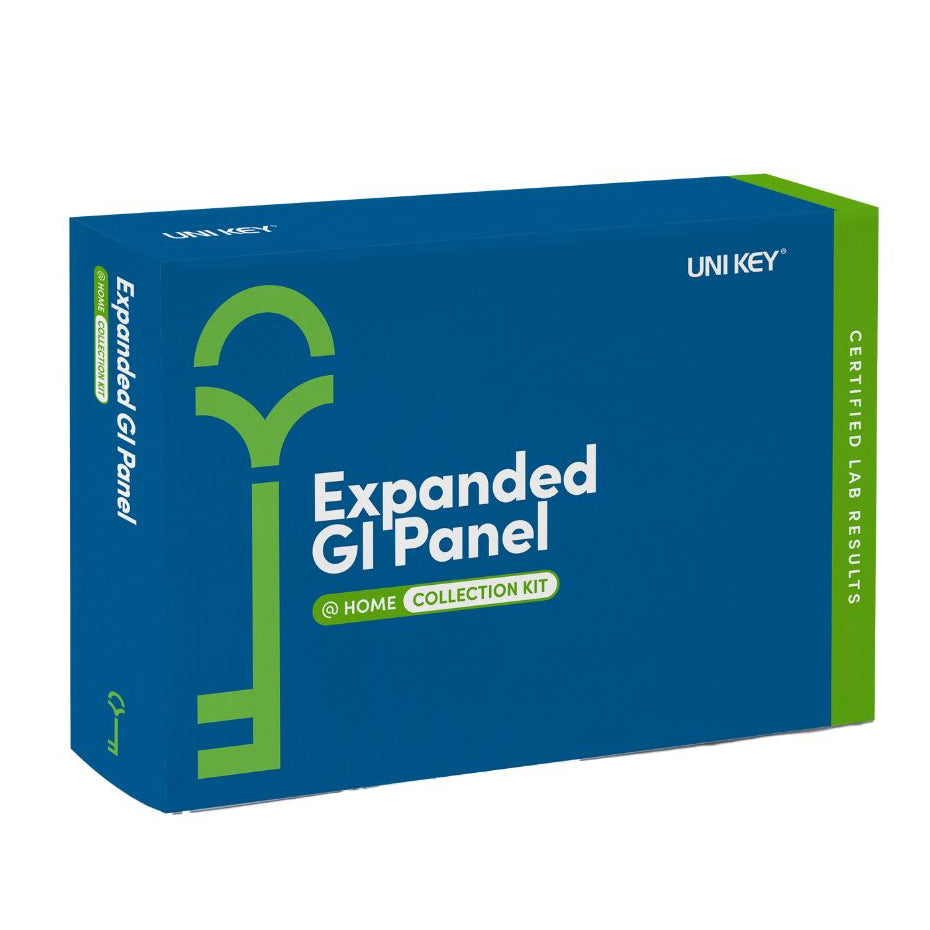
Expanded GI Panel
- ✓ Screens for potential pathogens, parasites, yeast, and fungi
- ✓ Evaluates food sensitivities and key intestinal function markers
- ✓ Includes lab analysis and personalized recommendations from Ann Louise Gittleman
How Collection Works
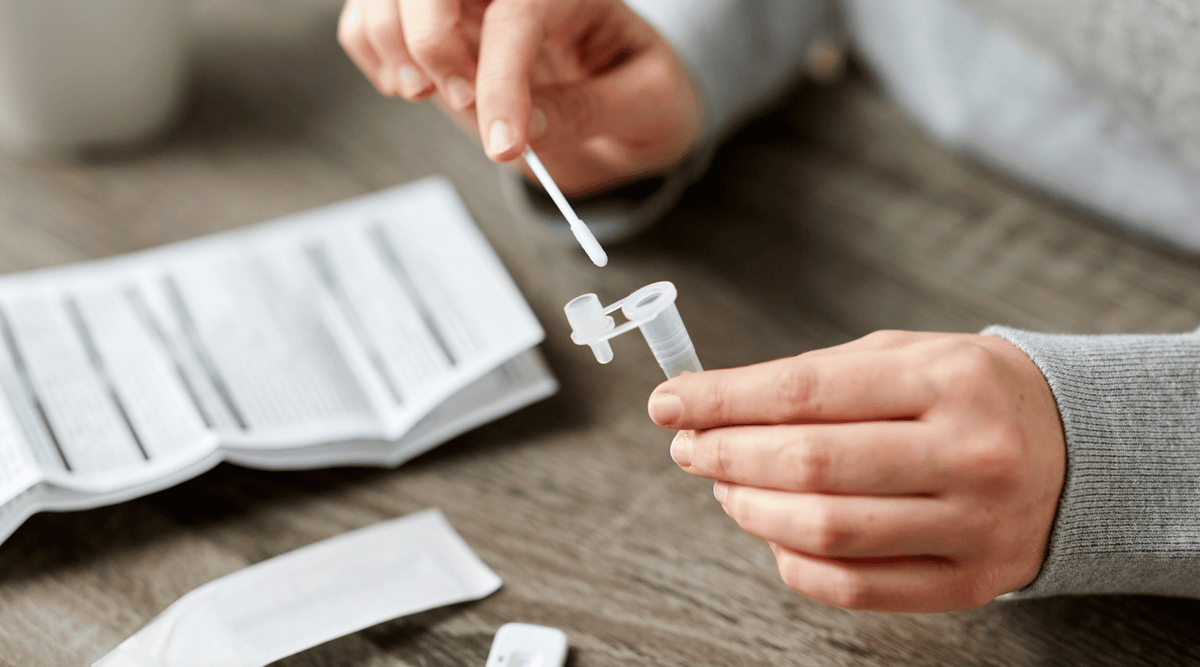
For the Expanded GI Panel, you collect three stool samples and two saliva samples. Both are required.
The kit includes collection vials, instructions, paperwork, and prepaid shipping. Results and a personalized letter of recommendations typically arrive within 2–3 weeks after the lab receives your samples.
Before you start:
- Read the full instructions carefully.
- Check any food restrictions, collection timing, labeling, and shipping rules.
- Ask about medicines or supplements that might affect results.
- Follow the storage directions that come with the kit.
Keep stool samples separate from toilet water and urine. Complete the paperwork and ship as directed.
Confirm ordering eligibility and any location restrictions before you purchase. UNI KEY’s testing team can answer questions at 800-888-4353 or testing@unikeyhealth.com.
What the Results Can and Can’t Tell You
A useful report gives your practitioner evidence to consider. Its value comes from connecting the findings to the question that led you to test in the first place.
An organism found in the sample may need treatment, confirmation, or no action at all, depending on what was detected and your overall situation. An abnormal marker may lead to another test. A negative result only covers what that panel looked for—persistent symptoms still deserve follow-up.
This panel is not a microbiome sequencing test or a SIBO breath test. Those answer different questions.
Laboratory quality matters, but the most important factor is whether the test can actually answer your question. Ask about the methods used, their limitations, and how the results should be interpreted. A longer report is not automatically more helpful.
UNI KEY includes a personalized letter of recommendations with your results and offers support from their testing team if you have questions about the findings (800-888-4353 or testing@unikeyhealth.com).
When to Skip a Kit and See a Doctor
Contact a clinician promptly if you have:
- Blood in the stool
- Unexplained weight loss
- Persistent fever
- Severe or sudden abdominal pain
- Black, tarry stools
- Dehydration or an inability to keep fluids down
Blood in the stool, blood in the urine, unexplained weight loss, persistent fever, or severe abdominal pain needs prompt medical attention. Don’t wait on a mail-in kit for those.
What to Do With the Results
Bring the full report to your practitioner, along with a short list of your symptoms, medicines, supplements, recent travel, and any relevant exposures. Ask which findings matter, whether anything needs confirmation, and what next steps are supported by the evidence.
It helps to write down the question you hoped the test would answer before you open the report. Keep that question in mind during the review so the conversation stays focused.
UNI KEY states that customers receive their results with a personalized recommendation letter from nutritionist Ann Louise Gittleman, PhD, CNS. Nutritional guidance can complement care, but a suspected infection or concerning marker also needs medical review.
After a positive finding has been evaluated, a practitioner might discuss optional support products (such as Para-Key) as part of an individualized plan. These should never replace indicated medical treatment. Do not start a cleanse based on symptoms alone.
Considering the Expanded GI Panel? Review exactly what it covers with the practitioner who will help you act on the findings. At an affordable price, the strongest reason to order is a clear plan for using the information.
Expanded GI Panel
- ✓ Screens for potential pathogens, parasites, yeast, and fungi
- ✓ Evaluates food sensitivities and key intestinal function markers
- ✓ Includes lab analysis and personalized recommendations from Ann Louise Gittleman
Frequently Asked Questions
What is the difference between a microbiome test and a stool pathogen panel?
A microbiome test describes the microbial community in a sample. A stool pathogen panel checks for selected organisms relevant to infection. Compare the actual coverage and methods before choosing.
Are at-home gut health tests accurate?
Accuracy depends on the method, collection, handling, and what is being measured. Clinical usefulness also depends on whether the test answers your specific question. There is no single accuracy rating for all gut tests.
Do I need a doctor’s order for an at-home gut test?
Requirements vary by test, provider, and location. UNI KEY’s Expanded GI Panel can be ordered directly without a doctor’s order (U.S. customers). Even when you can order a kit yourself, plan for qualified interpretation and medical follow-up if results are concerning.
Can an at-home test detect parasites?
Yes, an appropriately selected lab test can detect certain parasites in samples collected at home. No test covers every parasite, and multiple samples or additional testing may be needed. Your exposure history helps guide the choice.
What is a comprehensive stool analysis?
It is a panel of stool measurements that may include organisms, digestion markers, or inflammation markers. The name does not guarantee a specific list of tests. Ask for the exact analytes and how the findings will be used.
How long do results take?
Timing varies by laboratory and test. Here at UNI KEY, we typically provide results for the Expanded GI Panel within two to three weeks after the lab receives the samples. Allow extra time for shipping to and from the lab.
Sources and Further Reading
- NIDDK. Symptoms & Causes of Diarrhea.
- NIH National Library of Medicine, MedlinePlus. Calprotectin Stool Test.
- Cleveland Clinic. Stool Test: What It Is, Purpose, Procedure, Results & Types.
- NIST. Home Gut Microbiome Tests Give Varying Results. June 24, 2026.
- NIDDK. Diagnosis of Diarrhea.
- Mayo Clinic. H. pylori Infection: Diagnosis & Treatment.
- CDC. Diagnosis of Parasitic Diseases.
- NIH National Library of Medicine, MedlinePlus. Helicobacter Pylori Tests.
- CDC. Candidiasis Basics.
- American Academy of Allergy, Asthma & Immunology. The Myth of IgG Food Panel Testing.
- Cleveland Clinic. Leaky Gut Syndrome.
- NIH National Library of Medicine, MedlinePlus. Stool Elastase Test.


